
Pre-Conference Workshops
Join expert-led half-day workshops before the main conference. These sessions provide practical tools, research insights, and collaborative learning opportunities for school psychologists and educational professionals.
Sign Up Today for the Pre-Conference Expert-Led Workshops
You can register for a workshop through the online registration system under the “Workshops” step.
Date: July 08, 2026
Half-Day Workshops
CE Credits Available
| Half day Workshop | Half day Workshop | Half day Workshop |
|---|---|---|
|
€90
Prerequisite: Yearly income above US$ 25000
|
€65
Prerequisite: Yearly income equivalent or less than US$ 25000
|
€40
Prerequisite: Student Fee (corresponding registration)
|
Morning Workshops
Développer des relations de confiance pour prévenir le harcèlement scolaire (Presented in French)
Le harcèlement scolaire est un phénomène de groupe dont la persistance dépend des interactions quotidiennes entre élèves et des normes qui régulent les relations au sein de la communauté scolaire. Lorsqu’un témoin intervient, l’agression cesse dans plus de la moitié des cas. Pourtant, bien que les pairs assistent à la grande majorité des épisodes, moins d’un sur cinq tente d’intervenir.
Un élève peut désapprouver le harcèlement et s’abstenir d’agir parce qu’il croit que les autres acceptent ces comportements, parce qu’il craint d’être exclu ou ciblé à son tour, ou encore parce qu’il estime que ce n’est pas à lui d’intervenir. La plupart des élèves désapprouvent pourtant personnellement le harcèlement scolaire, mais chacun garde le silence. Ce silence finit par renforcer l’impression qu’il est accepté.
Les élèves osent davantage se soutenir lorsqu’ils se sentent en sécurité et soutenus par les adultes, et lorsque les normes de l’établissement valorisent la solidarité, la bienveillance et l’acceptation de la singularité de chacun.
Cet atelier donnera aux professionnels des clés pour promouvoir la santé mentale et relationnelle des élèves et construire un climat scolaire protecteur face au harcèlement. À partir de situations concrètes, les participants découvriront ce qui favorise les comportements prosociaux et exploreront ce qui, dans les interactions quotidiennes entre adultes et élèves, soutient émotionnellement les élèves et favorise leur autorégulation.
Le programme TEAL (Tous Épanouis À l’École), développé en France depuis cinq ans, sera présenté comme exemple de démarche de prévention. Les participants repartiront avec une grille d’analyse et des pistes d’intervention concrètes.
L’atelier sera animé par deux chercheuses aux parcours complémentaires, l’une psychologue, l’autre enseignante. Il alternera apports théoriques, mises en situation, activités pratiques et échanges.
- Analyser des situations de harcèlement scolaire à partir d’une lecture systémique, en tenant compte des dynamiques de groupe, des normes relationnelles et du climat scolaire.
- Comprendre en quoi la qualité des relations contribue au développement des compétences psychosociales et à l’instauration d’un climat scolaire protecteur.
- Identifier et s’approprier les leviers d’interactions pédagogiques qui favorisent un climat de classe bienveillant et réduisent les dynamiques d’exclusion.
- S’approprier des repères issus du programme TEAL pour accompagner les équipes éducatives dans la mise en place de pratiques favorables à la prévention du harcèlement scolaire.
- Domaine 5 : Pratiques à l’échelle de l’école pour favoriser les apprentissages
- Domaine 6 : Services pour promouvoir des écoles sûres et soutenantes
Intervenantes

Floriane Boyer
Pendant près de dix ans, Floriane Boyer a accompagné des enfants et leurs familles confrontés à des difficultés scolaires et relationnelles au sein d’un centre de thérapie systémique, notamment dans des situations de harcèlement. Elle exerce aujourd’hui en tant que psychologue et thérapeute familiale dans un cabinet pluriprofessionnel.
Depuis cinq ans, elle développe et coordonne en France le programme TEAL (Tous Épanouis À l’École), un programme de prévention du harcèlement en école primaire qu’elle a conçu avec Laure Durand-Laville, en collaboration avec le Pr Rebecca Shankland.
Elle forme les psychologues de l’Éducation nationale, les enseignants et les professionnels du secteur médico-social sur le climat scolaire, le développement de l’enfant et l’accompagnement des familles. Ses recherches portent sur les compétences psychosociales, le climat scolaire et la prévention du harcèlement.
Floriane est doctorante au laboratoire DIPHE de l’Université Lumière Lyon 2 et membre de l’Observatoire du Bien-être à l’École.

Laure Durand-Laville
Après dix-sept années d’enseignement en école primaire, au cours desquelles elle s’est formée à des approches pédagogiques innovantes et alternatives, Laure Durand-Laville est aujourd’hui doctorante en sciences de l’éducation et engagée dans la formation des professionnels de l’éducation.
Elle contribue au développement du programme TEAL (Tous Épanouis À l’École) en France. Titulaire du diplôme universitaire « Développer la santé mentale, relationnelle et les compétences psychosociales », elle est également membre de l’Observatoire du Bien-être à l’École.
Ses travaux de recherche portent sur le rôle de la qualité des interactions enseignant-élèves dans le développement des compétences psychosociales et de la motivation des élèves. Ses activités de formation s’appuient sur les apports de la recherche internationale afin d’accompagner les enseignants dans l’amélioration de leurs pratiques interactionnelles en classe.
When Symptoms Overlap: Empowering School Psychologists in Complex Diagnostic Decisions
In school systems worldwide, students often present with overlapping symptoms that span neurodevelopmental and emotional disorders, creating complex diagnostic and service-planning challenges. This workshop equips school psychologists with practical, developmentally grounded strategies to differentiate conditions such as autism, ADHD, obsessive-compulsive disorder, intellectual developmental disorder, and anxiety disorders.
Participants will learn how to move beyond surface-level symptom overlap by using a responsive evaluation approach that integrates interviews, observations, rating scales, and performance-based measures to produce clear, culturally relevant case formulations. Emphasizing functional analysis, contextual influences, and equitable practices, this session empowers practitioners to strengthen diagnostic reasoning, reduce misidentification, and enhance global school-based mental health supports.
- Differentiate neurodevelopmental and emotional disorders by examining developmental history, functional behavioral patterns, and contextual influences.
- Integrate multi-method, responsive assessment data into coherent, culturally appropriate case formulations that enhance diagnostic clarity.
- Apply structured differential diagnostic frameworks to reduce misidentification and promote equitable service planning in diverse school settings.
- Domain 1: Data-Based Decision Making
- Domain 3: Academic Interventions and Supports
- Domain 4: Mental and Behavioral Health Services
- Domain 8: Equitable Practices for Diverse Student Populations
Presenter

Ray W. Christner, Psy.D., NCSP, ABPP
Independent Practice, USA
Ray W. Christner, Psy.D., NCSP, ABPP, is a board-certified specialist in Behavioral and Cognitive Psychology, a licensed psychologist, and a certified school psychologist with extensive experience in school, clinical, and forensic settings. He maintains an independent practice in Pennsylvania, focusing on psychological and neuropsychological assessment, psychotherapy, and consultation.
Dr. Christner is widely recognized for his work in cognitive-behavior therapy (CBT), transdiagnostic and developmentally informed assessment and intervention, and school-based mental health. He has authored and edited numerous professional publications and a book series focused on practical, evidence-based applications of psychological science in educational settings.
An experienced presenter and international trainer, Dr. Christner’s work emphasizes responsive assessment, integrative case conceptualization, and collaborative practices that strengthen equitable mental health and education services for children and adolescents.
He is the author of the forthcoming Christner Behavior and Adaptability Assessment System (C-BAAS™), which will be released in 2027 by PAR, Inc.
Classwide Interventions: Fact or Fiction
Classroom management is a top concern in education today. More than 90% of school teachers report that they have dealt with problem behaviors that interfere with classroom instruction. These behavior problems cause a significant amount of lost instructional time, and student classroom behavior can also be a source of teacher burnout.
Classwide management practices serve as the basis of all school instruction. Multitier Systems of Support (MTSS) cannot function without effective classroom management practices. School and educational psychologists are often in positions to advocate for effective group behavior management.
Fortunately, there are many classroom management strategies that reduce these problems. Most importantly, good classroom management practices have the potential not only to reduce existing problem behavior but also to prevent the development of new problems and psychological disorders.
However, a number of classroom management myths have permeated education systems. This workshop will provide a nuanced understanding of three common myths: the role of intrinsic motivation, the assumption that students should already know how to behave, and the belief that older students do not like to be praised.
Participants will also explore three high-leverage practices that support the behavioral needs of nearly all students, including the Good Behavior Game, the Color Wheel approach, and effective praise and limit-setting strategies.
- Recognize and understand common myths that prevent the implementation of effective classroom management strategies.
- Understand methods for culturally-informed praise and limit setting.
- Learn how to apply research-based approaches to adapting the Good Behavior Game across diverse groups of students, multiple types of behaviors, and school contexts such as hallways, classrooms, and playgrounds.
- Apply effective approaches for communicating expectations using the Color Wheel.
- Domain 4: Mental & Behavioral Health Services & Interventions
- Domain 5: School-Wide Practices to Promote Learning
Presenters

Kathleen Aspiranti, Ph.D.
University of Kentucky, USA
Kathleen Aspiranti is a prolific scholar of intervention research, a Fulbright alumna, and will serve as the President of the Trainers of School Psychologists beginning August 2026. She is currently an Associate Professor of School Psychology at the University of Kentucky.
She serves as Program Director for the PhD and EdS School Psychology programs and Director of Graduate Studies for the Department of Educational, School and Counseling Psychology. She received her Ph.D. in School Psychology from the University of Tennessee-Knoxville.
Dr. Aspiranti previously worked as a school psychologist in a rural public school district and holds her professional license in psychology. She currently provides consultation and evaluation services to school districts across Kentucky and leads the KASPIR (Kentucky Academic and Behavioral School-based Prevention and Intervention Research) lab at the University of Kentucky.
Her primary research interests include the development and validation of academic and behavioral interventions in school settings, particularly using single-case design for students with and without disabilities.

David Hulac, Ph.D.
University of Northern Colorado, USA
David Hulac is a nationally recognized school psychologist and professor at the University of Northern Colorado. His scholarship focuses on schoolwide and classwide behavioral management, systems-level practices, and strengthening professional training in school psychology.
He has conducted normative research on publication patterns among faculty and has contributed to advancing evidence-based practices that improve outcomes for students and schools.
In 2026, he was named Distinguished Scholar by the National Association of School Psychologists, recognizing his sustained research contributions to the field. He has served as President of Division 16 of the American Psychological Association and as President of the Trainers of School Psychology.
Afternoon Workshops
Solution Focused Counseling for School Practitioners
This workshop is designed for school practitioners who meet with students in brief, time-limited encounters. Common Factor research shows that successful counseling is driven less by any single theory and more by elements shared across approaches: the student’s strengths and challenges, a strong working alliance, hope/positive expectancy, and methods that fit the student, family, culture, and school context. Drawing from Solution-Focused Brief Therapy and related approaches, participants will practice working from a collaborative, not-knowing stance and four core skills: listening for what’s already working, co-constructing a clear future focus, activating resources (strengths, exceptions, supports), and encouraging small, feasible next steps. Emphasis is on using these strategies in everyday moments—hallways, drop-ins, and scheduled sessions—to build hope, strengthen alliance, and help students take meaningful action toward preferred futures.
- Describe four common factors linked to effective counseling.
- Demonstrate a collaborative, not knowing stance that centers student voice.
- Use four core skills: identify what’s working, co-create a future focus, activate resources, and elicit next steps.
- Apply solution focused tools such as scaling questions, exception and coping questions, and compliments.
- Fit questions and interventions to the student’s readiness to change.
- Domain 4: Mental and Behavioral Health Services and Interventions
- 2.2 Prevention, Mental Health Promotion and Crisis Intervention
Presenter

Michael R. Hass, Ph.D.
Professor Emeritus, Chapman University, Orange, California, USA
Michael Hass is Professor Emeritus in the Counseling and School Psychology Program at Chapman University. Dr. Hass also holds a volunteer appointment as a Visiting Professor at Vietnam National University, University of Education, Hanoi, Vietnam. His interests include school mental health, strength-based approaches to counseling, social and emotional assessment, and report writing. Dr. Hass is a co-author of Writing Useful, Accessible, and Legally Defensible Psychoeducational Reports and Student Mental Health in the Classroom: Essentials for Teachers, and author of Interviewing for Assessment. In 2016, he earned the California Association of School Psychologists’ Sandra Goff Memorial Award lifetime achievement award for his contributions to School Psychology in California and the nation. He is currently the Co-Chair of the ISPA Accreditation Committee.
From Programs to Impact: Strengthening Sustainable Bullying Prevention in Schools
Despite the widespread adoption of school-based anti-bullying programs, many initiatives show limited or short-term acceptance and sustainability. This workshop is designed for school psychologists who seek to strengthen the adoption, uptake, impact and long-term sustainability of bullying prevention efforts in diverse educational contexts.
Participants will explore key reasons why programmes succeed or fail in real school settings. They will examine criteria for selecting anti-bullying programmes and translating research evidence into durable, system-wide prevention practices. The workshop will also explore psychological mechanisms underlying bullying, victimisation, and bystander behaviour, and how these interact with peer dynamics, adult practices, and school climate.
The session is structured around a staged implementation framework encompassing adoption, capacity building, multiplier development, and sustainability, with strong emphasis on the role of the school psychologist as a system-level change agent and supportive partner to schools. Common practical and ethical issues in programme implementation will also be addressed.
Using case studies, practical exercises, group discussion, and collaborative problem-solving, participants will develop tools for adapting interventions, strengthening consultation, and monitoring progress over time.
- Identify key factors influencing the success and sustainability of anti-bullying programmes, including programme selection, school climate, staff engagement, and ethical considerations.
- Apply a staged implementation framework to strengthen adoption, capacity building, and multiplier development in their own school contexts.
- Strengthen sustainable school-wide prevention practices through effective consultation, ethical decision-making, and ongoing monitoring of outcomes.
- Domain 6: Services to Promote Safe and Supportive Schools
- Domain 9: Research and Evidence-Based Practice
Presenters

Anthi Loutsiou, Psy.D.
Department of Psychology, University of Cyprus, Cyprus
Anthi Loutsiou, PsyD, is Director of Clinical Training in the Department of Psychology at the University of Cyprus, where she has trained over 200 school and clinical specialist psychologists. She is nationally licensed as a clinical psychologist in Cyprus and previously practiced as a registered psychologist in Colorado, USA after graduating from the University of Denver.
Her work focuses on contextual approaches to behaviour, capacity building, and system-level prevention. She has led nationally implemented parent training programmes and whole-school anti-bullying initiatives, including a programme based on the Vienna Social Competence model currently implemented in Cypriot secondary schools across all geographical districts in partnership with key stakeholders.
Dr. Loutsiou is an active member of the International School Psychology Association, having served as ISPA Conference Convenor (2021), co-founder and co-chair of the Parent Education and Family Resilience Interest Group, member of the Accreditation and Convenors Committees, and journal reviewer.
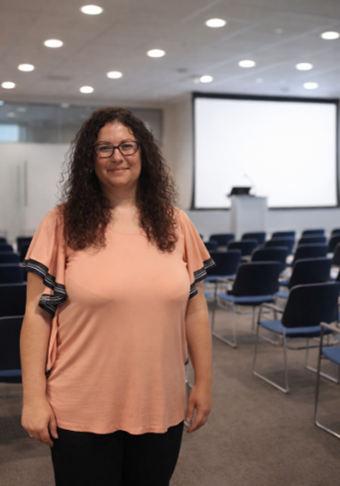
Andri Anastasiou, Ph.D.
Educational Psychology Service, Ministry of Education, Culture and Youth, Cyprus
Andri Anastasiou, Ph.D., is a nationally licensed school psychologist in Cyprus and works at the Educational Psychology Service of the Ministry of Education, Culture and Youth. She has extensive experience supporting children, families, and educational communities.
Dr. Anastasiou specializes in evidence-based assessment, prevention, and intervention practices that promote emotional well-being, positive peer relationships, and academic engagement. She has a strong interest in social–emotional learning and inclusive practice, working collaboratively with teachers and school leaders to create safe, supportive environments that meet the diverse needs of all students.
She is committed to bridging research and practice, advocating for data-informed decision-making, and building capacity within schools through consultation, professional development, and culturally responsive support. She is also an engaged member of the International School Psychology Association and served as a key member of the Local Organizing Committee of the Annual ISPA Conference (2021).
Navigating the Digital Age: Understanding and Promoting Youth Mental Health and Digital Well-Being
Digital technology is transforming how young people connect, learn, and experience the world, but how can schools help students navigate this landscape successfully? This workshop equips educators and school-based mental health professionals with practical, research-backed strategies to help students thrive.
Participants will explore the benefits and challenges of digital engagement for students’ cognitive, social, and emotional development. Through presentations, real-world case studies, and interactive discussions, attendees will leave with practical tools and strategies for fostering healthy digital habits, mitigating risks, and promoting well-being.Haddock, A., Ward, N., Yu, R., et al.; O’Dea, N. (2022). Positive effects of digital technology use by adolescents: A scoping review of literature. International Journal of Environmental Research and Public Health, 19(21), 14009.
- Identify the benefits and challenges of digital engagement on students’ cognitive, social, and emotional development.
- Apply practical, research-informed tools and strategies to foster healthy digital habits, reduce risks and promote resilience in students.
- Integrate digital well-being practices into multi-tiered systems of support (MTSS) and collaborate with families and community partners to strengthen student mental health.
- Domain 4: Mental and Behavioral Health Services and Interventions
- Domain 5: School-Wide Practices to Promote Learning
- Domain 6: Services to Promote Safe and Supportive Schools
- Domain 7: Family, School, and Community Collaboration
- Domain 9: Research and Evidence-Based Practice
- Domain 10: Legal, Ethical, and Professional Practice
Presenter

Aaron Haddock, Ph.D.
Clark University, USA
Aaron Haddock, Ph.D., is an Associate Professor of Practice in the Department of Education, Director of the School Psychology Program, and Director of Behavioral Health Initiatives at the Mosakowski Institute for Public Enterprise at Clark University. A credentialed multiple-subject teacher and Nationally Certified School Psychologist (NCSP), Dr. Haddock has worked in schools and communities as a teacher, school psychologist, program evaluator, and consultant.
His expertise spans social-emotional learning, child and adolescent behavioral health, comprehensive school-based mental health systems, behavioral science, academic achievement, and the impact of digital technology on youth development. He regularly publishes and presents on these topics for academic and professional audiences.
Dr. Haddock’s work is grounded in a social justice commitment to equitable access to high-quality education and mental health support for all young people. He bridges research and practice to strengthen comprehensive school-based mental health systems and improve student outcomes, especially for youth in underserved communities.
He founded and co-chairs ISPA’s School Psychology in International Schools Interest Group and conducts research on the presence and nature of school psychological services in international schools.
Dr. Haddock earned his Ph.D. in Counseling, Clinical, and School Psychology from the University of California, Santa Barbara (UCSB) and completed his clinical internship at Yale School of Medicine. He also holds an M.Ed. in School Psychology (UCSB), an M.A. in Educational Leadership (Antioch University), and an M.A. in Modern European Studies (Columbia University). He is the recipient of a Fulbright Scholarship to Vienna, Austria.
Bilingual School Psychology: Is speaking another language enough?
The Multilingual Learners (MLs) population is increasing around the world, but the number of school psychologists prepared to provide bilingual services is not growing at the same pace. MLs have unique strengths and needs and require school psychologists to have specialized training to support them at school.
MLs who are not being provided appropriate instruction, or who may be newcomers or immigrants with a background of trauma or little schooling may present themselves with academic, behavioral, or social-emotional concerns that place them at a higher risk of misidentification (as a student with a learning or emotional disability) and educational misplacement (special education). These circumstances underscore the need to prepare bilingual school psychologists.
This workshop will describe how the California Consortium for Bilingual School Psychology (CCBSP) was created to address the need to prepare highly qualified bilingual school psychologists. The CCBSP identified 13 areas of competency a bilingual school psychologist should develop to provide high quality services to Multilingual Learners. Participants will explore these competencies and discuss their application within a global context.
- Become familiar with the competencies for bilingual school psychologists proposed by the CCBSP.
- Explain how speaking another language is required but not sufficient to be a highly qualified bilingual school psychologist.
- Analyze and discuss how the competencies proposed by the CCBSP could be integrated in the preparation of bilingual school psychologists in their countries.
- Domain 8 – Equitable Practices for Diverse Student Populations
Presenter
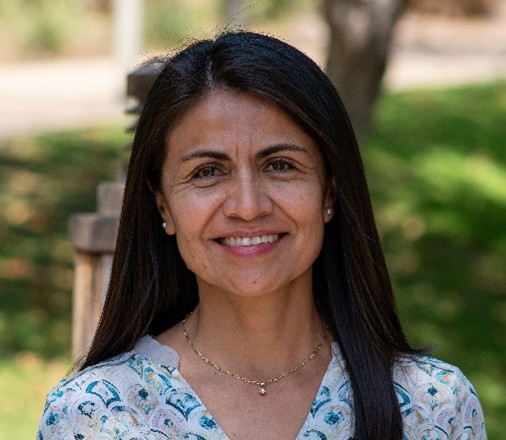
Patricia Sánchez Lizardi, Ph.D., NCSP
Associate Professor, San Diego State University, California, United States
Patricia Sánchez Lizardi, Ph.D., NCSP, is an Associate Professor in the school psychology program at San Diego State University (SDSU). She completed her undergraduate studies in psychology at the National Autonomous University of Mexico in Mexico City, and her master’s and Ph.D. in school psychology at the University of Arizona.
She has worked as a school psychologist in California, Arizona, and New Jersey with Culturally and Linguistically Diverse (CLD) students from preschool through high school. Patricia and her colleagues lead an interdisciplinary collaboration project that prepares bilingual school psychologists and speech-language pathologists to provide services to Multilingual Learners with high-intensity needs.
Before joining SDSU, she worked as a university professor and clinician in Brazil and Mexico. Her scholarly work focuses on the preparation of bilingual school psychologists to provide services to the increasing population of Multilingual Learners in K–12 schools. She is also a founding member of the California Consortium for Bilingual School Psychology (CCBSP), a group of educators working toward the certification of bilingual school psychologists in the United States.